

The T2 Transformation Project is nearly at an end.
It’s been over ten years since it was first announced, and eight years since the project began. With a global pandemic in the middle, the transformation of Manchester Airport’s Terminal 2 is nearly complete after what feels like an endless process. The final pieces of the puzzle are slotting into place, namely the upcoming opening of T2’s Wetherspoons, a few lounges, and a food hall….
One of the final significant parts of Terminal 2 has opened: the promised food hall
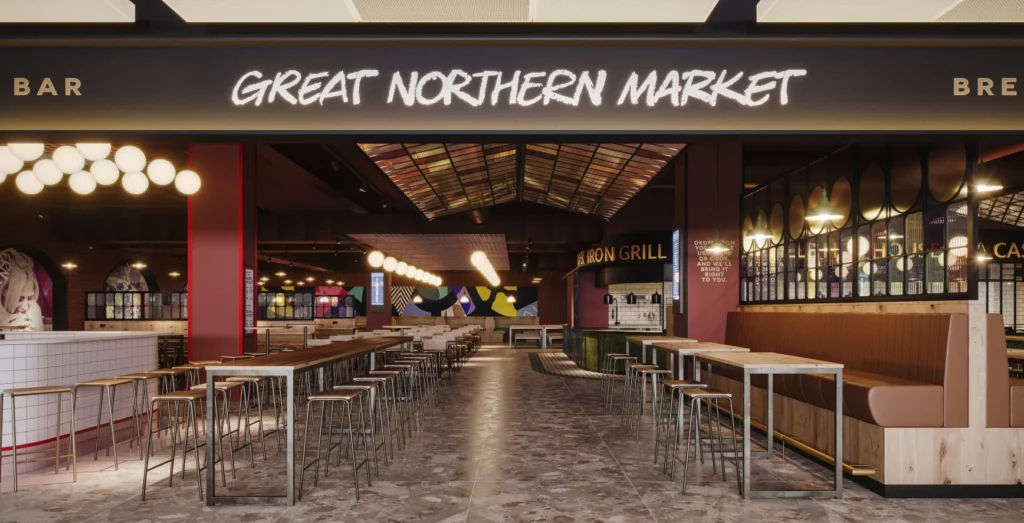
It’s called the Great Northern Market, and it offers a wide range of food options with table service. This isn’t the first or the tenth food hall in Manchester, but it’s rare to see something like this at an airport. In fact, MAN claims it’s the first of its kind in the UK. It’s also a big space with room for 470 people.
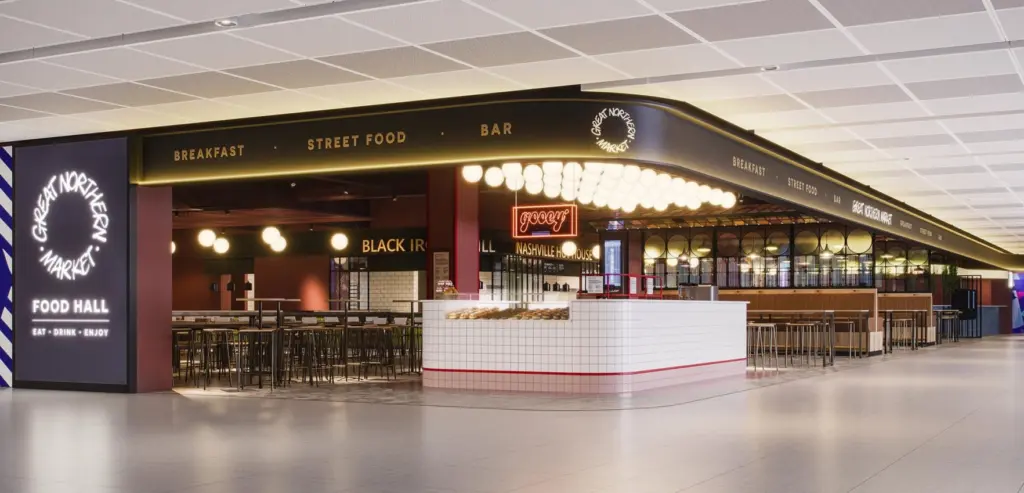
It makes sense to have something like this when you’re flying out. If you’re travelling as a family or group, then being able to order different cuisines means everyone gets what they want.
There are a number of brands (more on these later) that you can order from within the space, and ordering is possible via touchscreens or your mobile. The food is delivered to the table, making the whole process easy. Based on my experience of food halls, the timing of dishes can inevitably be out of sync if you order from different brands. That matters a lot less in an airport when you have time to waste.
Here are all the places you can order from in the new food hall:
- Gooey, serving doughnuts
- Black Iron Grill, with burgers and fries
- Palms Cafe, with Thai cuisine
- Nashville Hot House, with chicken and fries.
- La Casita for burritos, salads and nachos
- Kouzina with Greek food
The restaurants open at 11am, and serve food up to 8pm. Prior to that, there’s a single, and quite expansive, breakfast menu. Breakfast service starts at 4am.
What are the prices like?
Most main courses are in the £13 to £16 range, but many of those feel like they need a side to be a complete meal. Budget for £20 per person if you’re including fries. Beers start at £6.75 for a pint of pale ale, or just under £8 for a pint of Peroni, Guinness or Asahi.
There is a children’s menu, where lunchtime or evening dishes range from £7.50 to £16.50 excluding sides. Breakfast options come in between £6.50 and just under £10.
For the adult breakfast menu, a bacon or sausage sandwich is £7.75, with a latte or a flat white priced at £4. A full English breakfast is just under £15. The most expensive breakfast dish is the Buttermilk Fried Chicken Waffle at £16.50.
Haven’t we heard of these restaurants before?
Most likely not. Gooey is the most obvious real brand, as I walk past their Northern Quarter location a lot. They’re described by the airport as a Manchester favourite, and they’re the only brand within the food hall that has any local descriptor.
The rest seem a little…made-up. Nashville Hot House doesn’t seem to exist anywhere outside of the food hall. Black Iron Grill doesn’t return any independent Google results.
There’s a hint as to why in the press release. The food hall is run by Airport Retail Enterprises UK, a company that runs food options at other UK airports. This suggests that brands like Napoli Street Pizza have been created for the hall, rather than bringing them in.
Should we care?
On one hand, it would be great if the Great Northern Market was full of Mancuncian brands. Outside of that room, there are other local favourites in Terminal 2. Archie’s and Pot Kettle Black, plus the Amber Ale House run by Salford brewery Seven Brothers. You can view a list of all the shops and restaurants at T2.
The airport previously promised to provide a “taste of Manchester’s vibrant street food scene”. I’m not sure it quite delivers on that.
The reality is that you’re in an airport and you want some food. Whilst there are some great examples, especially in smaller US cities, of airports embracing local delicacies, do fliers really want an Eccles cake before take-off? Or a Manchester Tart? I mean no disservice to either dish.
That restaurant in the airport isn’t really that restaurant.
Here’s another hot-take. The shops and restaurants that you see inside an airport are often run or licensed by the airport itself, or a third-party intermediary like Airport Retail Enterprises UK. They partner with brands, meaning that the airport is effectively a franchisee. MAN take a cut of the profits rather than charging rent, and that ultimately means they make more money from that space.
This approach isn’t new to airports or the wider market. If you look at the EG Group, which operates petrol stations across the UK, they have revitalised boring, single-brand sites by bringing multiple brands onto one piece of land. A petrol station near me now has a full-service Starbucks, Subway and a Spar, whereas before it just had a shop.
It does mean that the brands you see, and the food they offer, are based on expected profitability. A local independent brand may simply not be able to deliver the margins that a national brand could. Of course, there’s no point in having a brand in an airport that has high margins but zero customer interest. That means there is a requirement that what’s on offer is popular.
When you’re operating an airport where the majority of the flights are via low-cost carriers that squeeze you on pricing, and you’ve rinsed all you can from forcing passengers to walk through duty-free, you need to find alternative ways to increase your income. Car parking, drop-off charges and fast-track charges have a theoretical ceiling of income and demand. Food and drink, franchising brands, or even making up brand-new-brands, is an opportunity.
Add a comment