
Flying a long-haul seat, on a long-haul plane, for less than two hours
We needed to get from Osaka to Seoul, and who better than the South Korean national carrier, Korean Air. At the point of booking, I knew them only as the airline that used to have a walk-in duty-free shop on their A380 (now sadly closed). Despite a relatively short flight time, we were on a widebody with full business class seats.
Quick Summary
- Korean Air’s new business class suite is spacious, well designed and comfortable.
- The on-board experience is good, but boarding was confusing and somewhat aggressive
- The food and drink was excellent, even on our two hour flight
- The lounge at KIX was much better than expected, given that it was a contract lounge. The food and drink options were especially good.
Where we flew with Korean
We flew from KIX, the airport that serves Osaka, Kyoto and Kobe. That’s built on an artificial island and is slowly sinking. We were staying in central Osaka, and it took us around an hour in a taxi.
Our Korean Air flight was taking us to Seoul, with a flight time of 1hr and 50 mins. We took off at 12:35pm, landing in Seoul at 2:25pm. These times were ideal for us, meaning we could have breakfast at the hotel at a reasonable time, get a taxi to the airport, and then not miss too much of the day in Seoul.
How we booked this flight with Korean Air
This was a rare situation where we paid cash for the fare. I couldn’t find reward availability, and with it being relatively short, it cost us just £140 each in Economy.
As we got closer to flight time, our plane was switched from an A330 to a 787-10. That larger plane had 325 seats versus the 276 on the original.
I decided to upgrade us to business class (or Prestige Class, as Korean Air calls it) partly because we lost the ability to book a pair of Economy seats in a row of two, but also to experience the new Prestige Suites 2.0 that come with the 787.
These new seats launched on the 787-10 back in 2024, so both the plane and the seat are only two years old.
Upgrading was easy when I spoke with the Korean Air services team via live chat. It took around ten minutes, and cost us £206 each to upgrade. We chose seats 15A and 16B, which were on the left-hand side and right at the back of the cabin.
Checking in at KIX
Despite Google Gemini putting the fear of god into us, as it was the start of Golden Week, both the check-in and security process were fast and efficient. We had no idea how busy things would get in Golden Week, a week that straddles multiple public holidays, so we turned to Ai. The answer, according to Google Gemini, was that it was going to be terrible. The reality was the complete opposite.
Korean had dedicated premium check-in desks, but the economy line was completely empty. Within two minutes, our cases were handed over, and we were walking to security. The check-in wasn’t just prompt, but also friendly.
There was no security fast-track, or at least we did not see one nor were we told about one. There was a queue of around thirty people waiting, but it moved very quickly from the initial passport check to the security hall itself.
Once we got in there, the process took as long as it took us to walk to the machines, dump our bags, and then walk through. It was painless.
What was KIX like?
The airport is long and thin, and parts of it are undergoing a refurbishment. We spent an hour in the lounge and then wandered around the terminal.
It felt like a pretty average airport, given the limited food and drink options, but as we walked towards our gate at the very far end of the airport, we realised there were more places to eat and shop further down. This is not an airport with a central area: everything is spread out, so it’s not obvious that there’s somewhere interesting if you just keep walking.
We got some last-minute gifts from one of the shops, enjoyed ten minutes in a (paid-for) massage chair, and then settled around our gate.
Overall, I did like KIX. The check-in area was open and light, a little like Heathrow T5, and it was not the scrum that I expected. The security process was easy, and the lounge was decent. I’d be pretty happy if I had to fly from here again.
The Korean Air lounge
Korean Air uses the Kix Kansai lounge. This sits on an upper floor, next to the Kix Premium lounge. It’s not clear what the difference is between those two lounges, as they seem to have the same facilities.
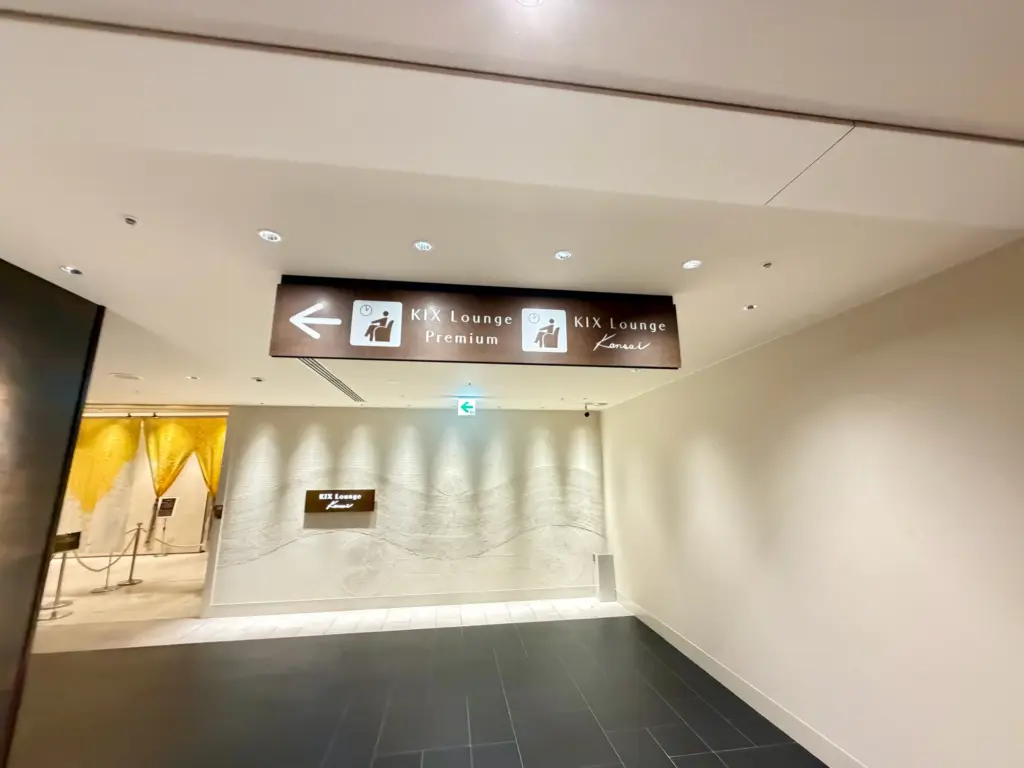
I didn’t have high expectations of it, but we ended up really liking the Kix Kansai. It’s a big space, with some decent food and drink options. It was barely 10% full when we arrived, and we sat in the quiet area. It even had mobile phone warnings posted on the tables.
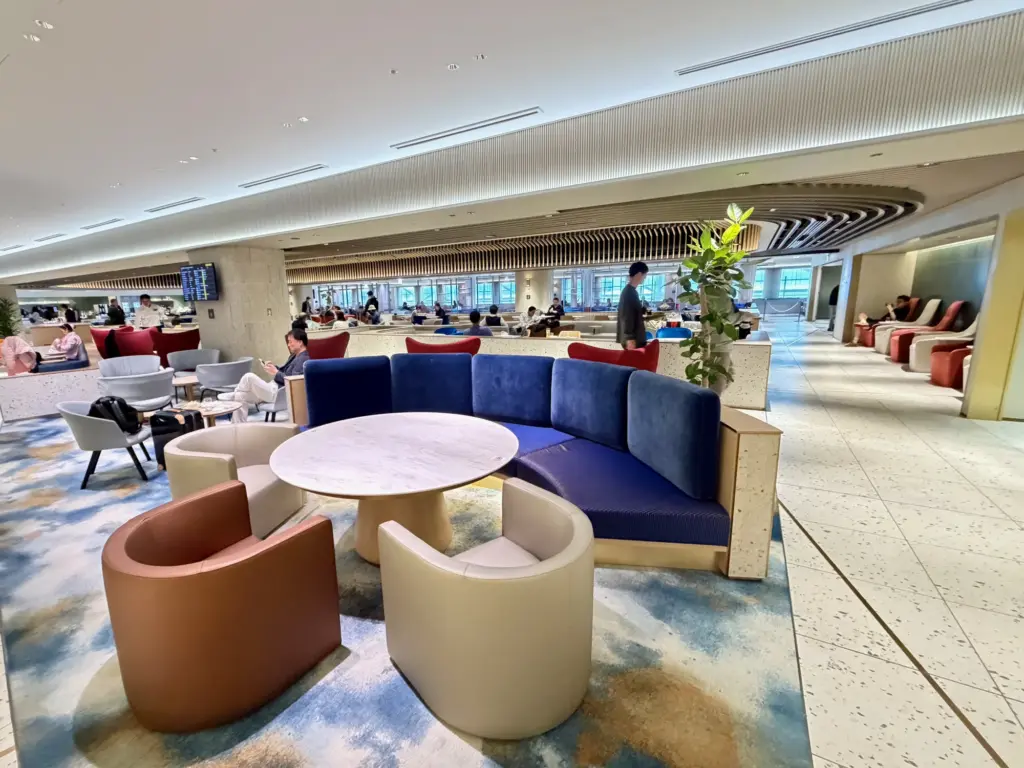
There were two free massage chairs in this seating area and three telephone booths for private calls. The lounge has showers, and the seating was comfortable.
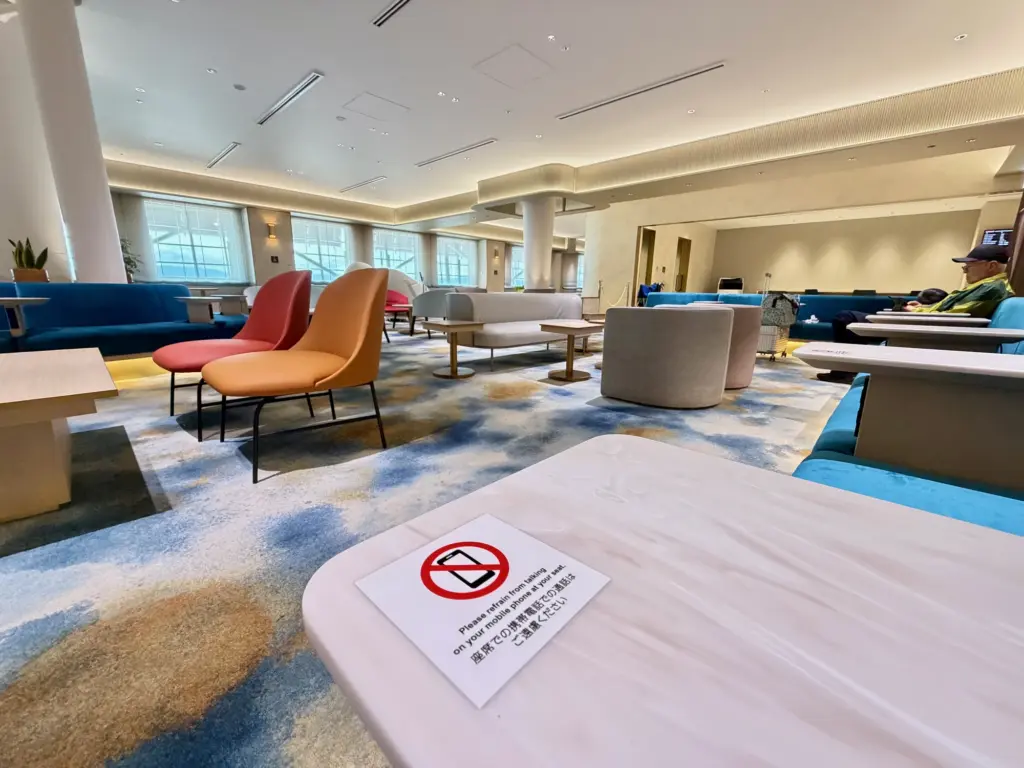
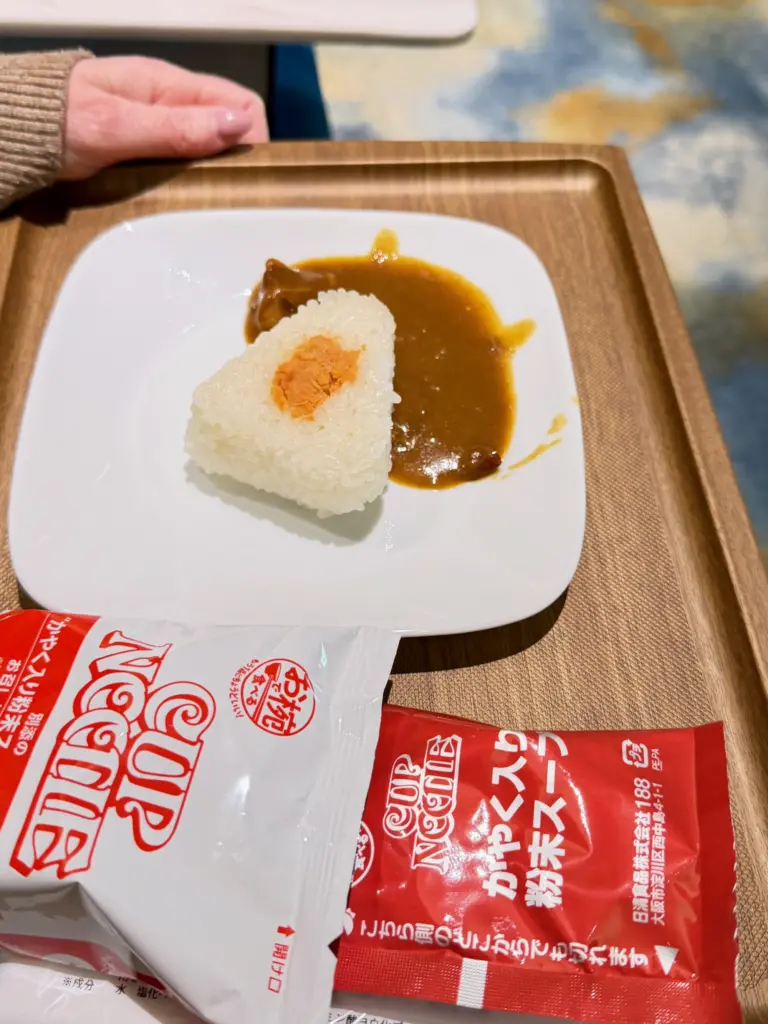
The Kix Kansai was a pleasant lounge, nicely decorated and with good food and drink. Kate enjoyed her meal (I wasn’t particularly hungry) and you can even utilise the cute wooden trays.
Boarding our Korean Air flight
The boarding was a confusing scrum, which started a few minutes late. What made it so strange was that a staff member checked your boarding pass and passport before you joined the boarding queue.
They stood about three metres away from the end of the queue, meaning that if you were to just join it, you would be shouted at. It was messy. After that, you have the standard passport and ticket check at the front of the queue. Boarding was via two jetbridges, with one for business passengers.
The Korean Air 787-10 seat
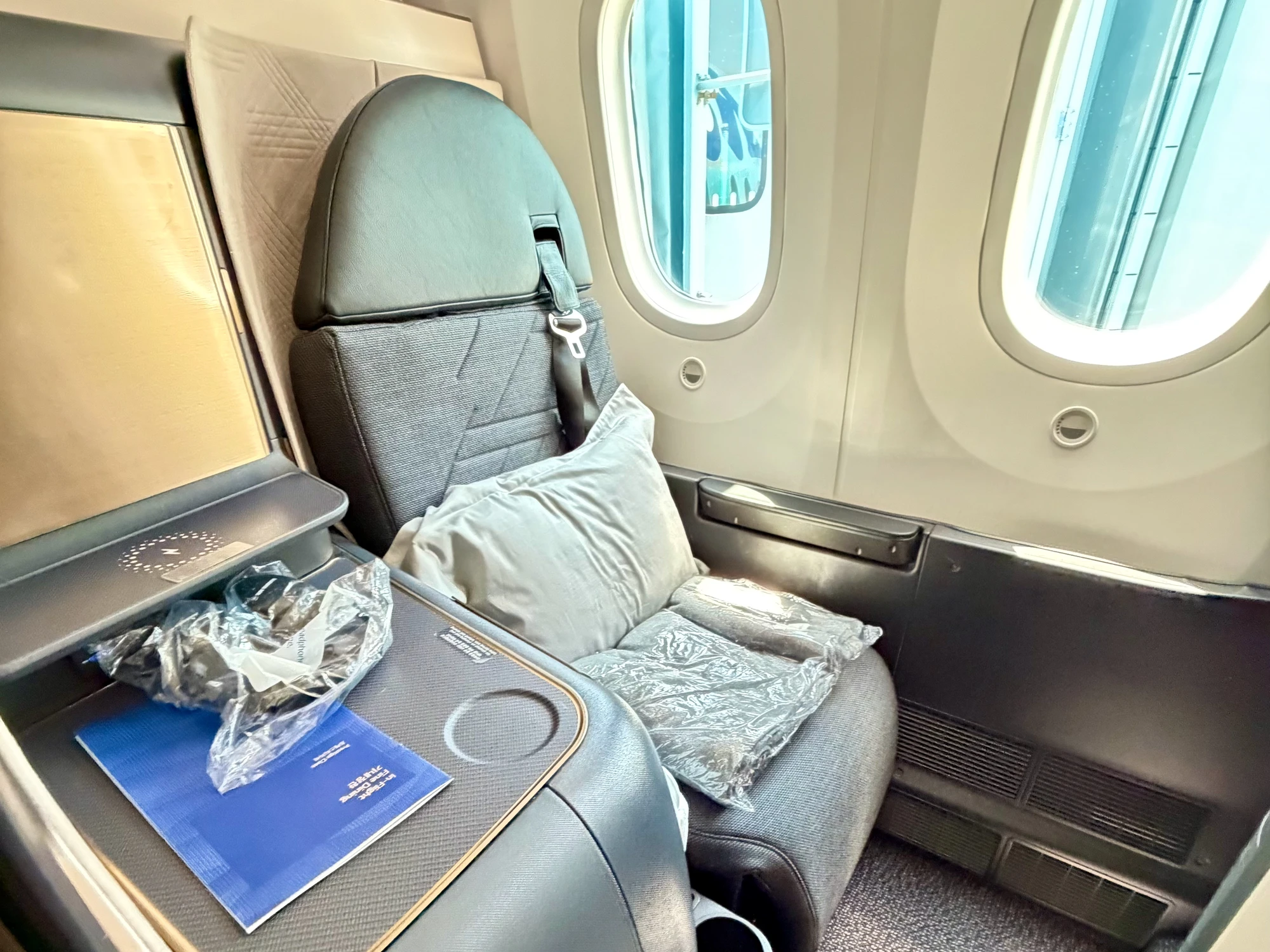
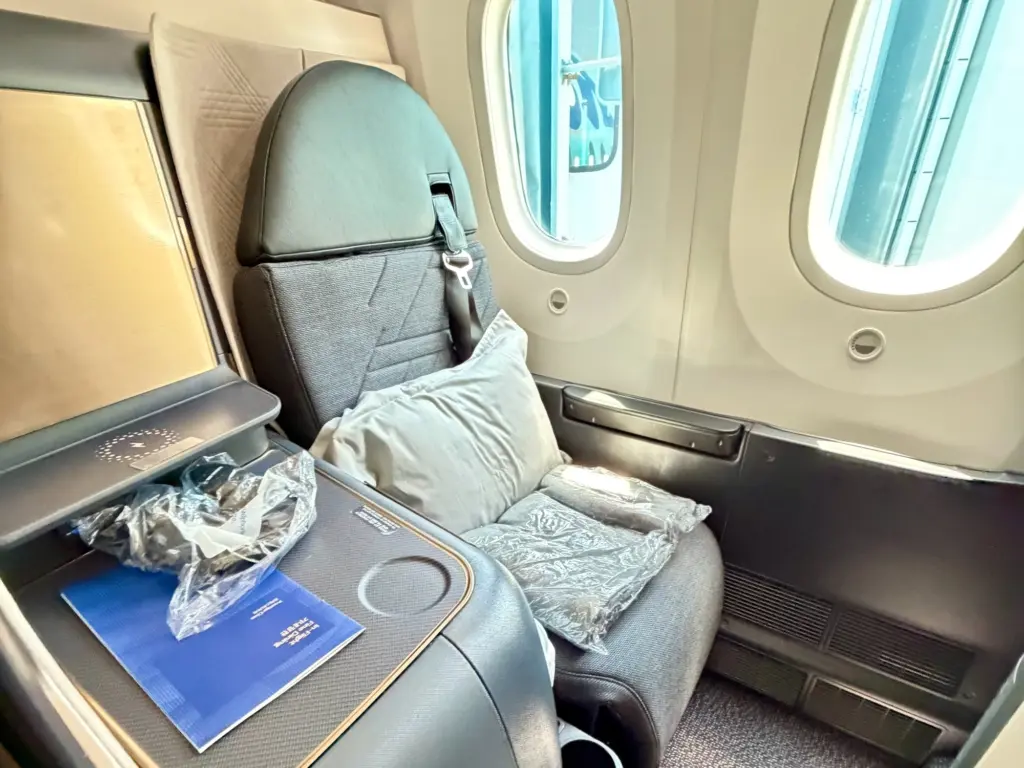
Despite the short flight time, this plane had a full business class suite, with a fully lie-flat seat and privacy door.
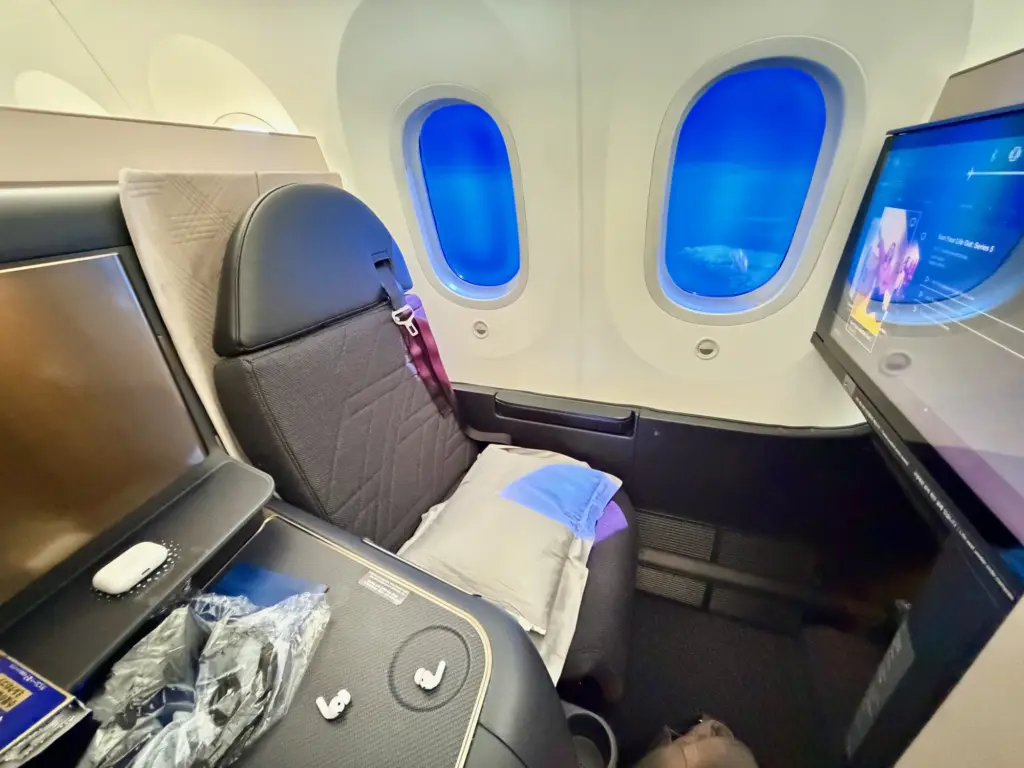
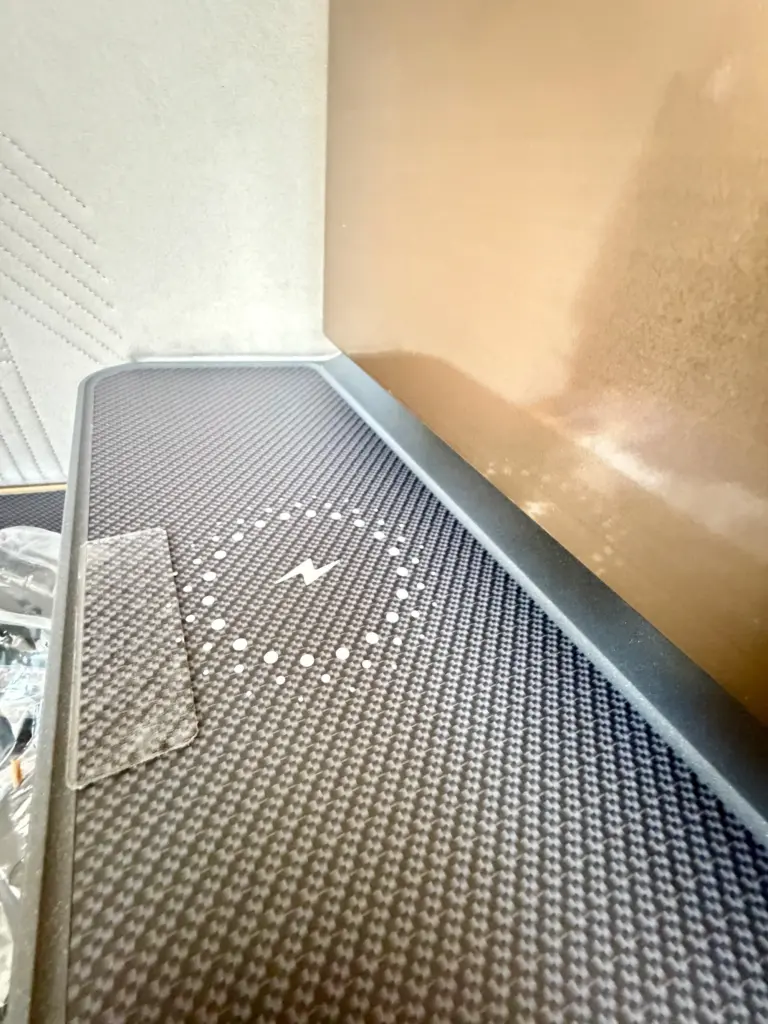
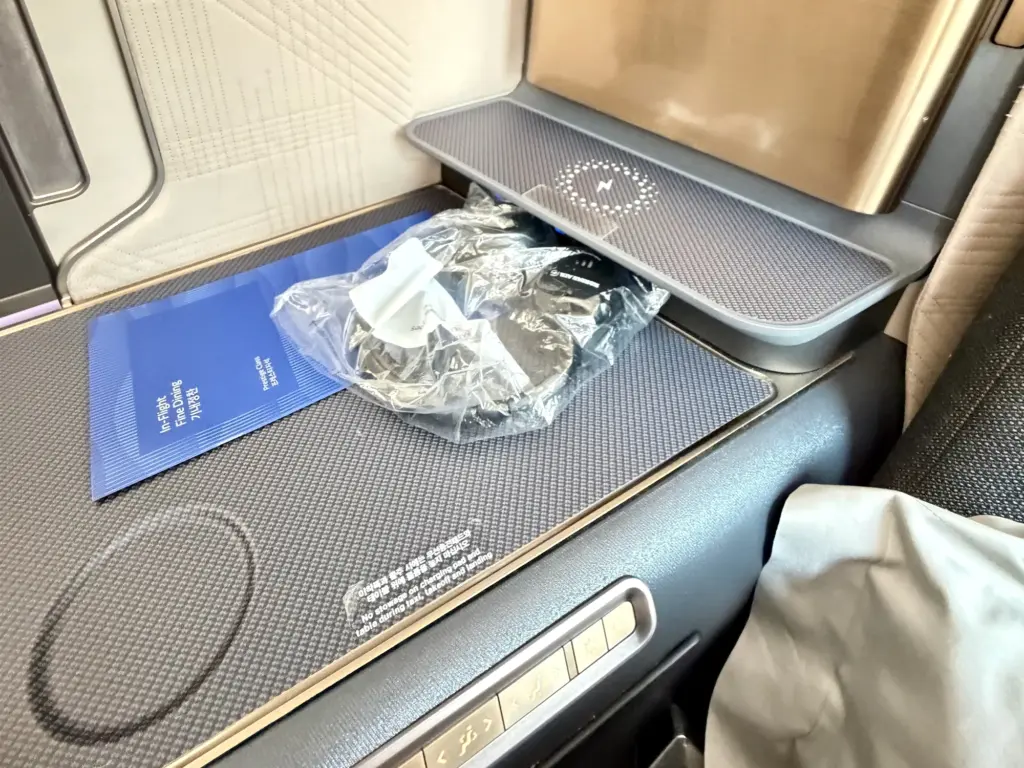
This is Korean Air’s new Prestige Suites 2.0, the latest incarnation of its business-class seat. Given that it launched two years ago, it had the features you’d expect of a more modern suite: a wireless charging shelf and USB-C connectivity.
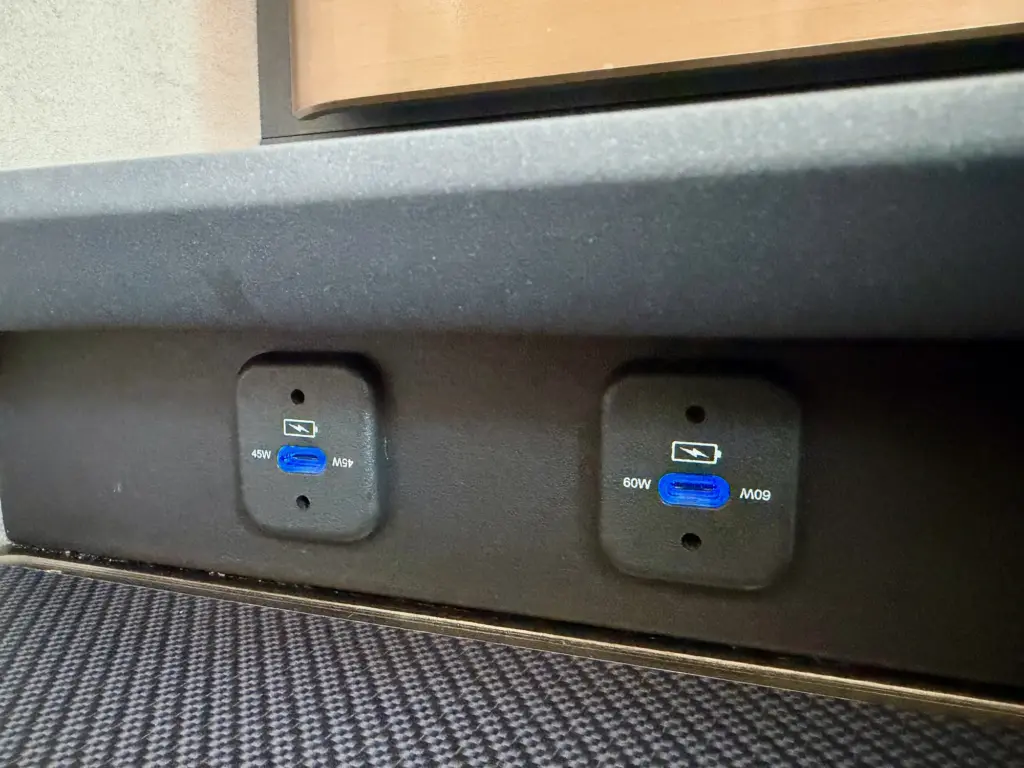
In fact it had not one but two USB-C charging ports, rated at different charging levels.
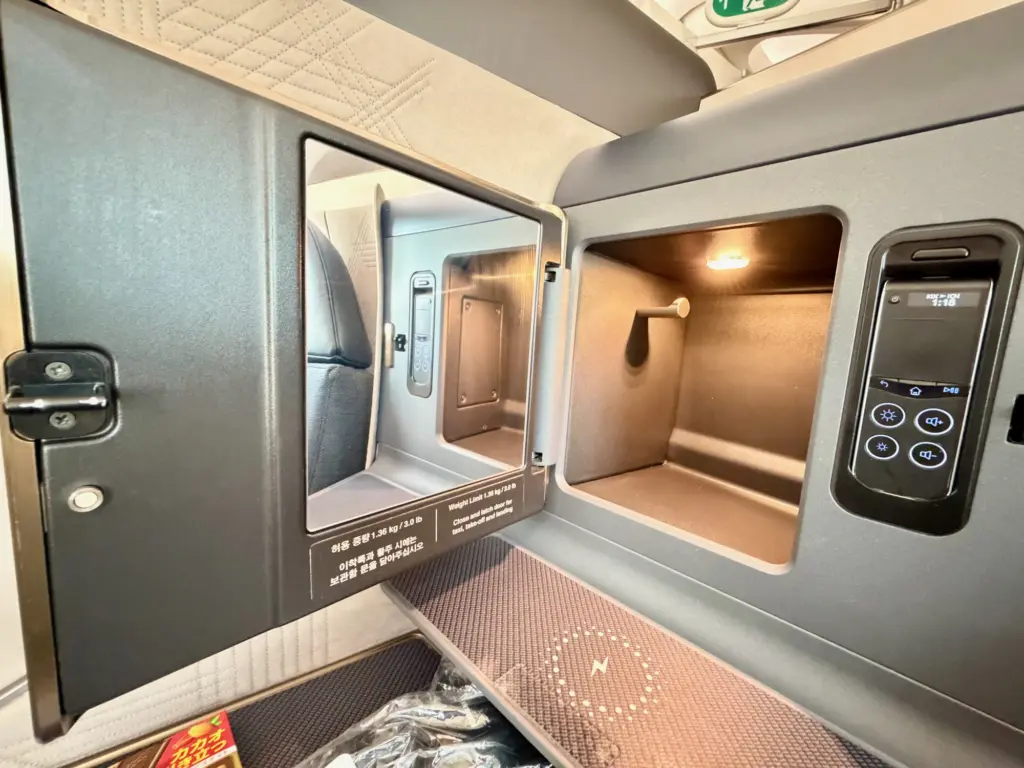
There’s a standard vanity cupboard with a mirror, but this is quite a deep storage unit compared to most. That helps, given that there’s not a huge amount of storage space within the seat. You do have the overhead storage bins above each seat, including the middle ones.
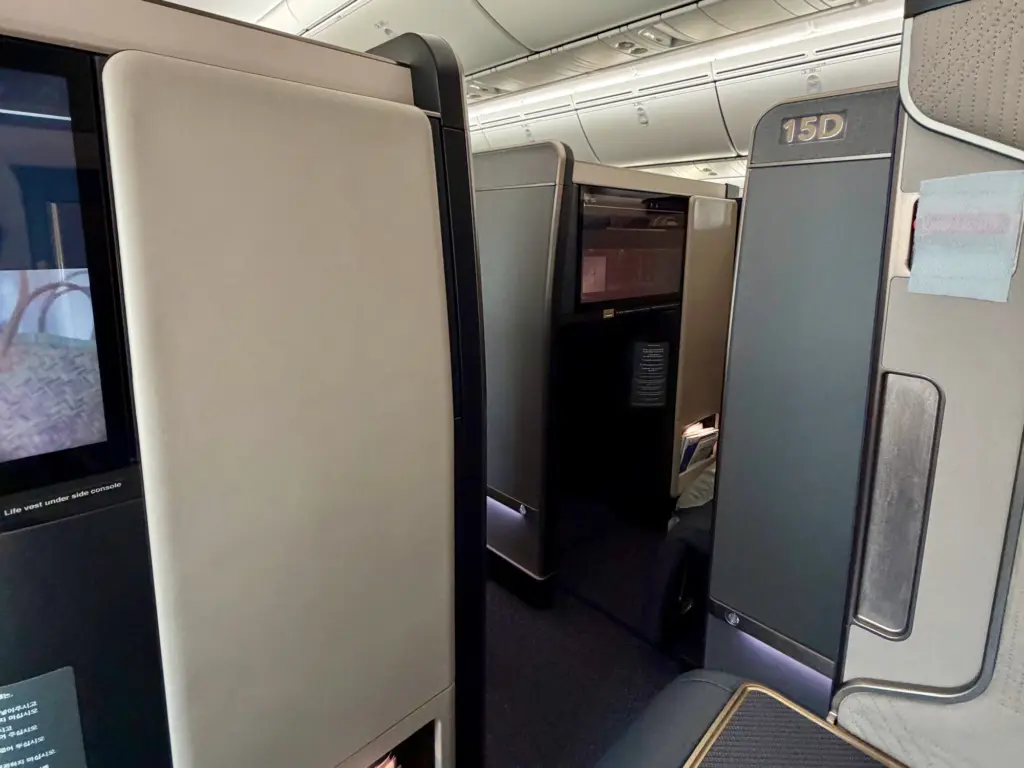
The business cabin has a 1-2-1 configuration, with the two middle seats separated by a divider that can be lowered. The middle seats are staggered, meaning the odd-numbered rows have seats that are next to each other, and then the even-numbered rows have them set apart. The odd-numbered rows have a divider that goes down the seat, meaning you can effectively make a double bed.
If you are travelling as a couple, and you want to be closer together, choose an odd-numbered row. Korean Air’s 787-10s do not have a First Class, but the Business cabin starts at row 7.
The 787-10 has nine rows in Business, all in the same cabin. There is no mini-cabin in Business.
This suite felt more private than most. It had a closable door, and the walls felt higher than those of other business cabins. For some reason, at least in my suite, the emergency open latch was covered with a large white sticker. I wonder how many times people accidentally used this to open the door.
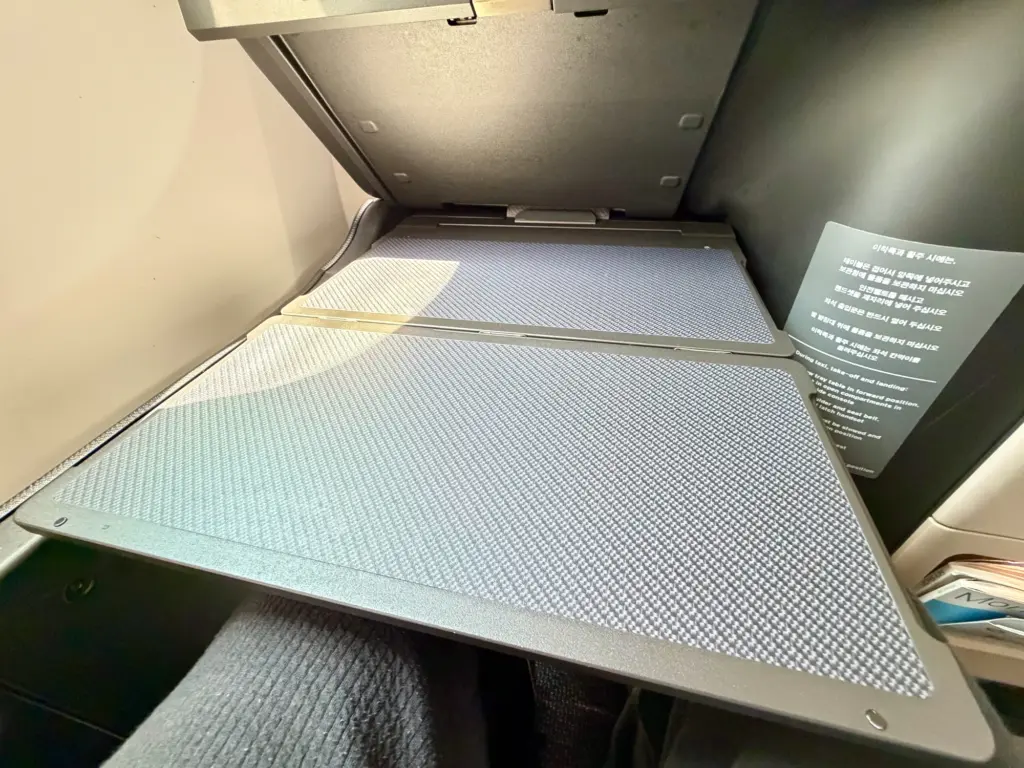
The tray table had a fold in the middle, meaning you can have it as a smaller surface for drinks, or fold it out entirely for meal service. It is a very big table, with more than enough space for food, drink and a laptop at the same time.
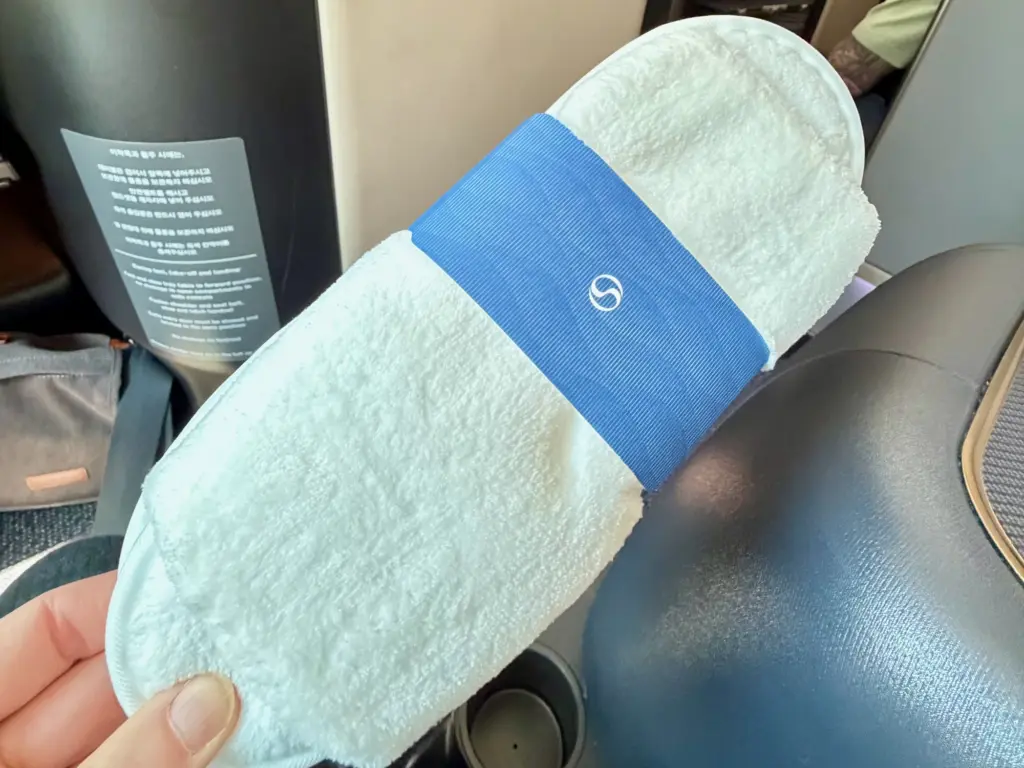
As this was a short flight, there was no amenity kit, but the suite did come with a pair of slippers. They weren’t quite Emirates First Class, but they were comfortable enough.
The 787-10 Bathrooms
There were three bathrooms in the business-class cabin, all at the front. One was permanently out of service during our flight, meaning the post meal rush for the toilet led to a queue.
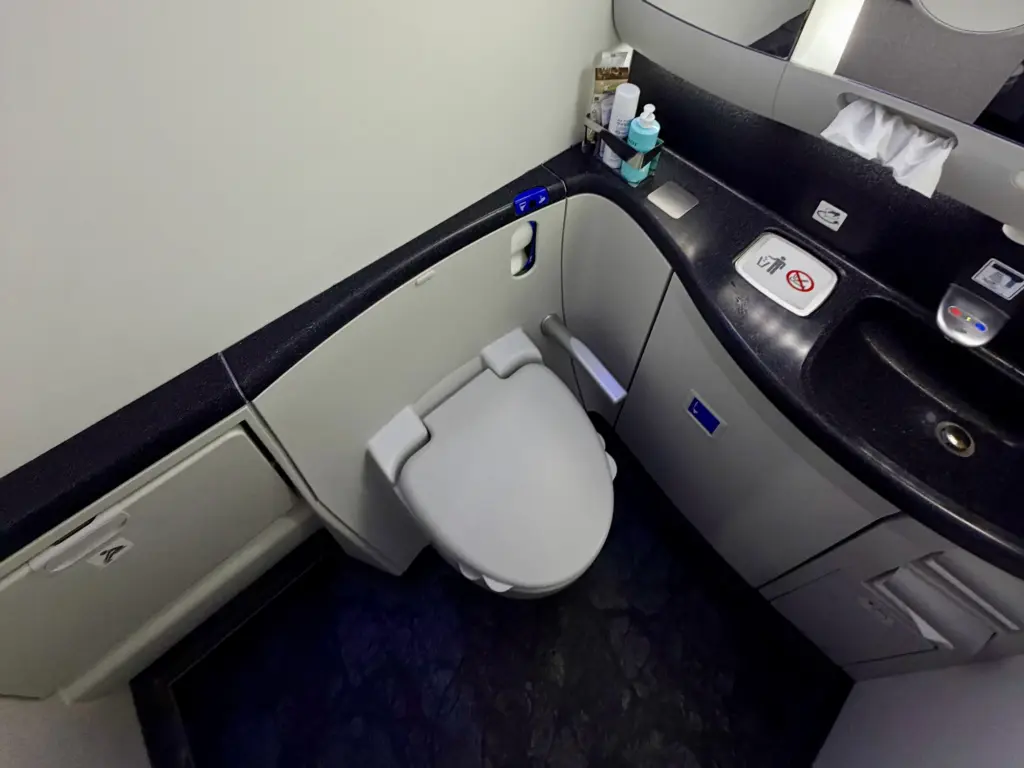
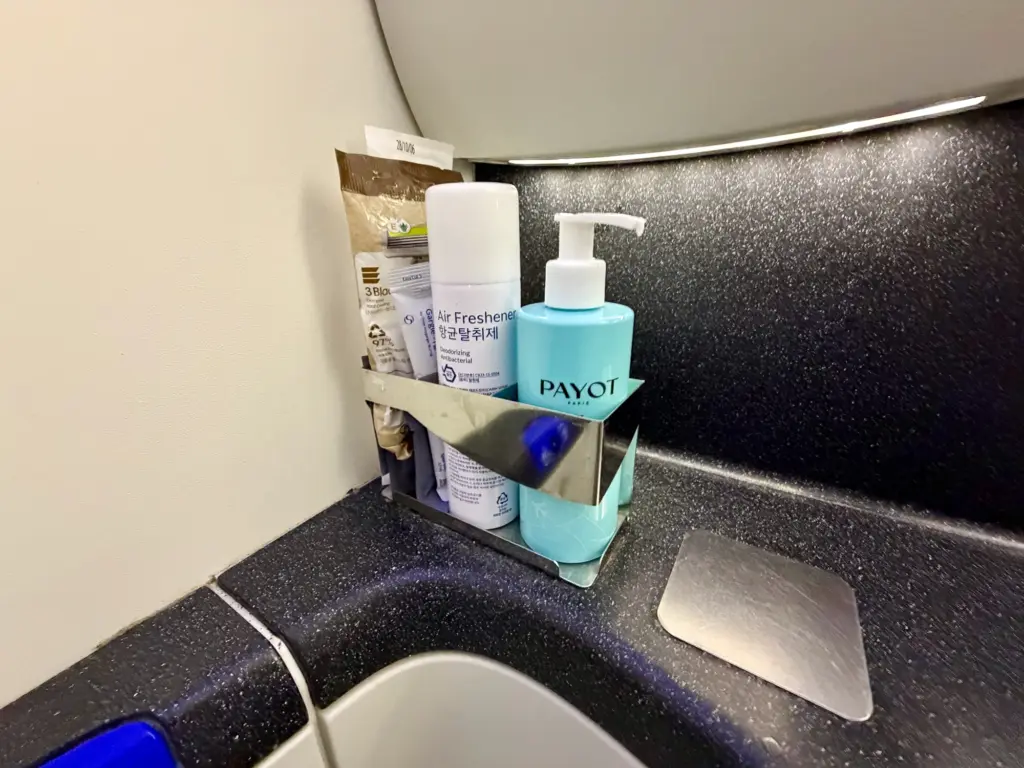
These are standard bathrooms, but they do come with some amenities. The hand lotion was from Payot, and there was a shaving kit in there
One of the bathrooms was slightly larger and suitable for disabled passengers.
Food and drink on Korean Air
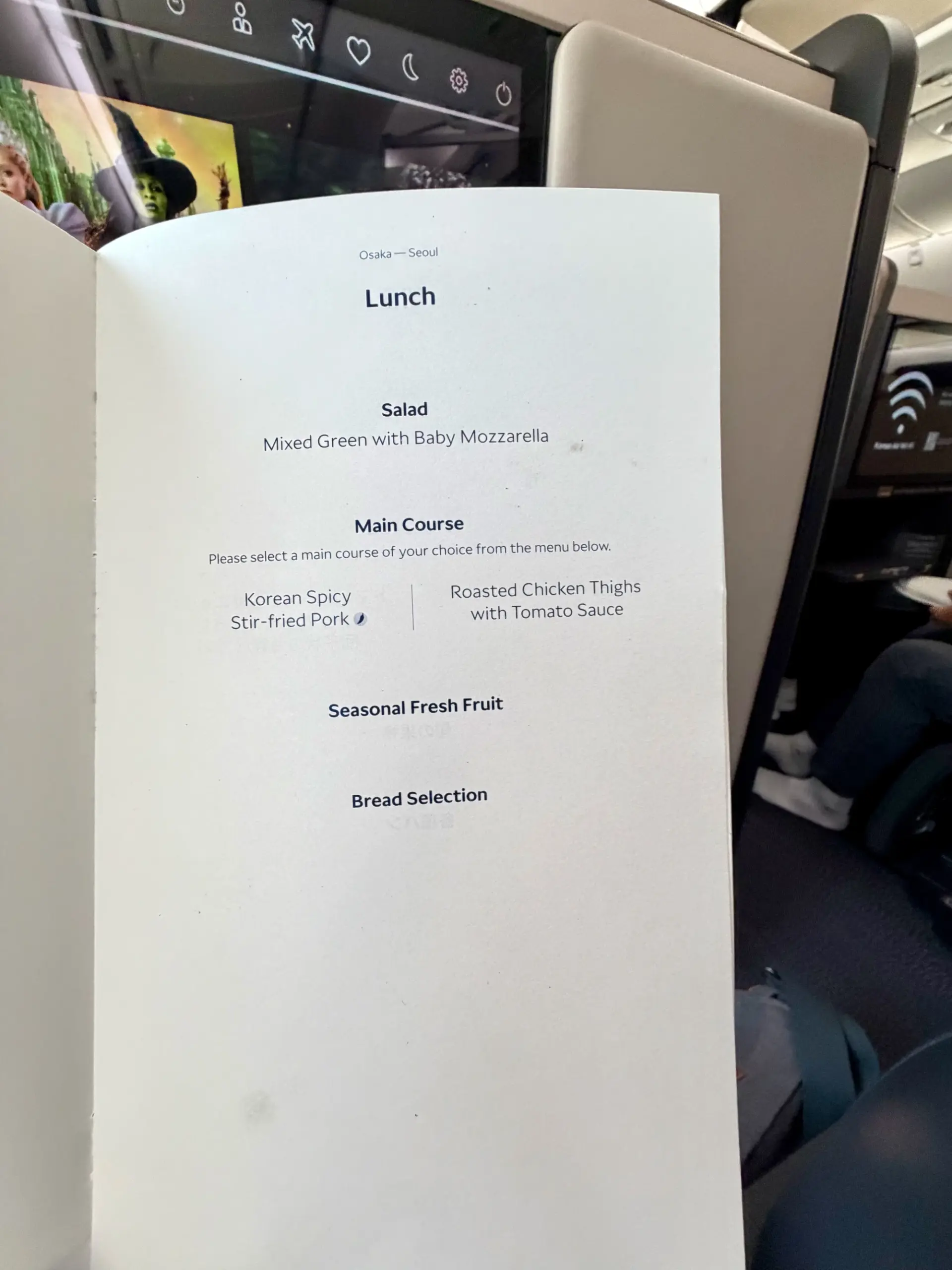
As this was a short flight, we had a reduced menu, with one meal service and limited options.
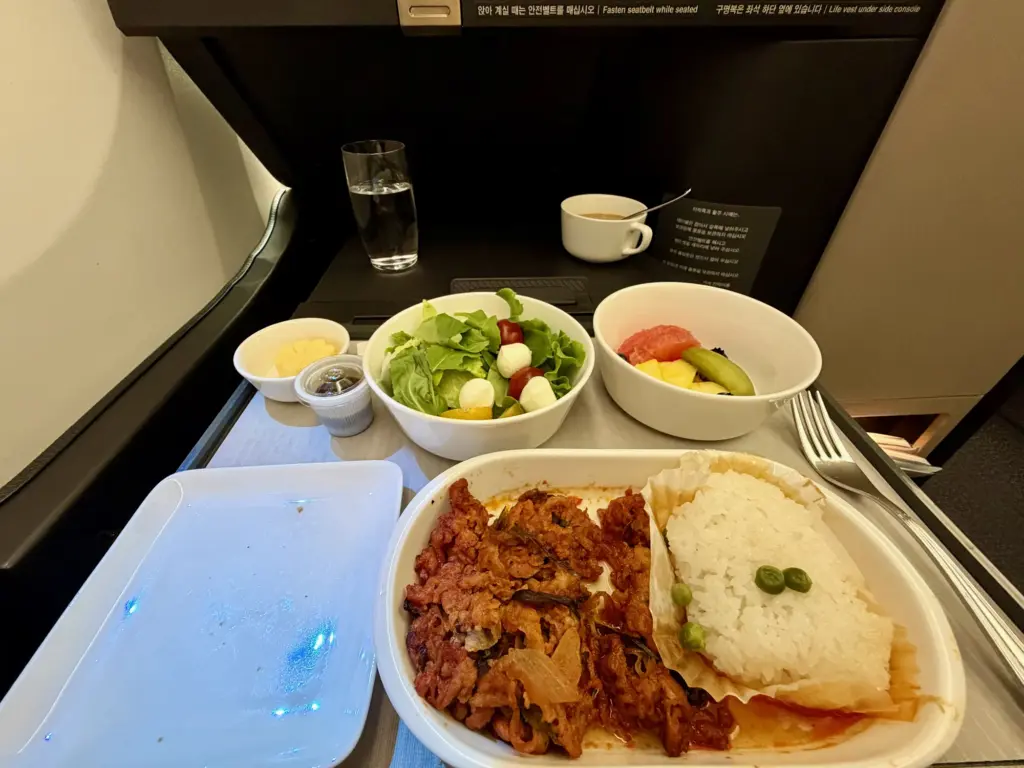
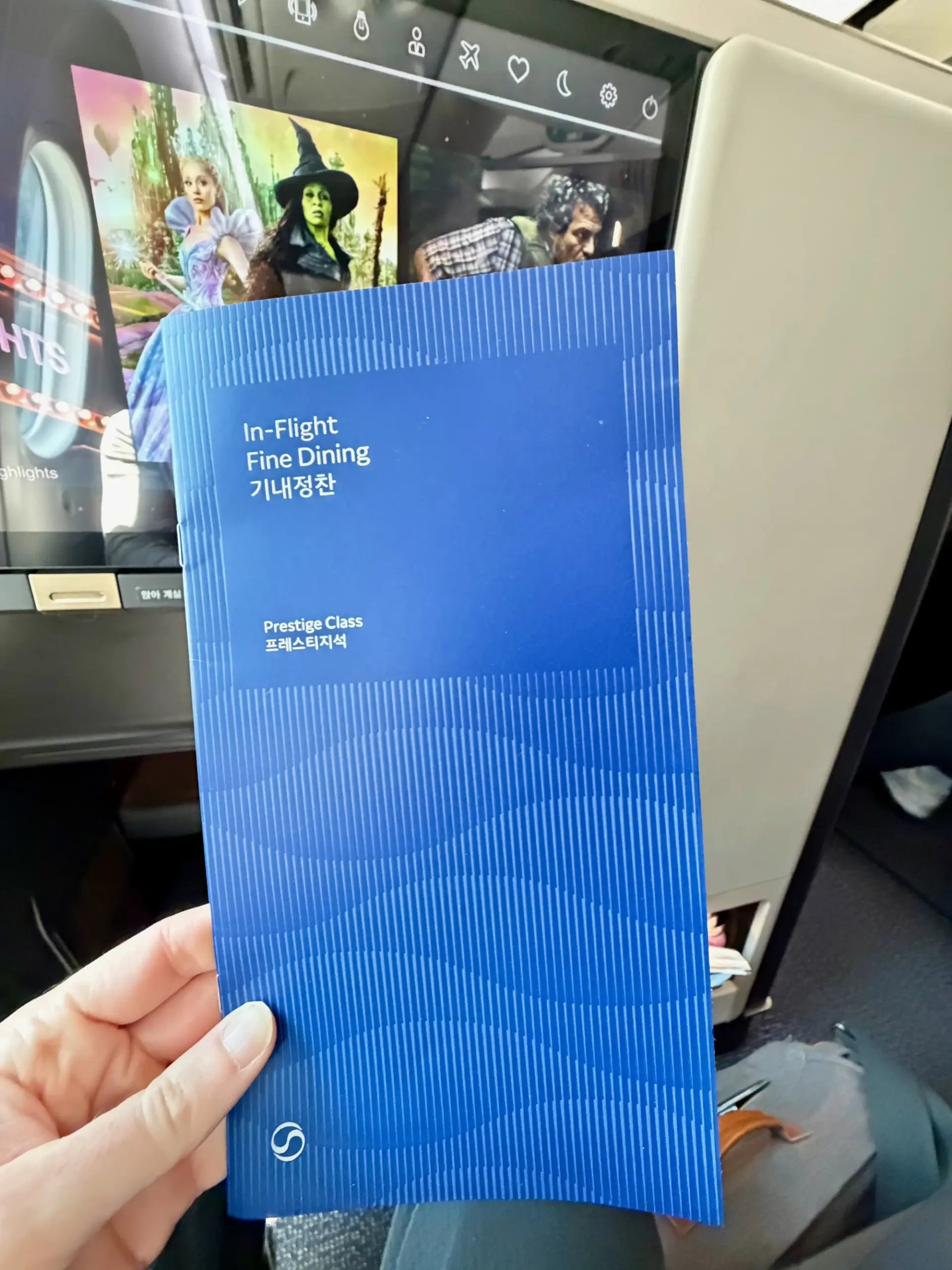
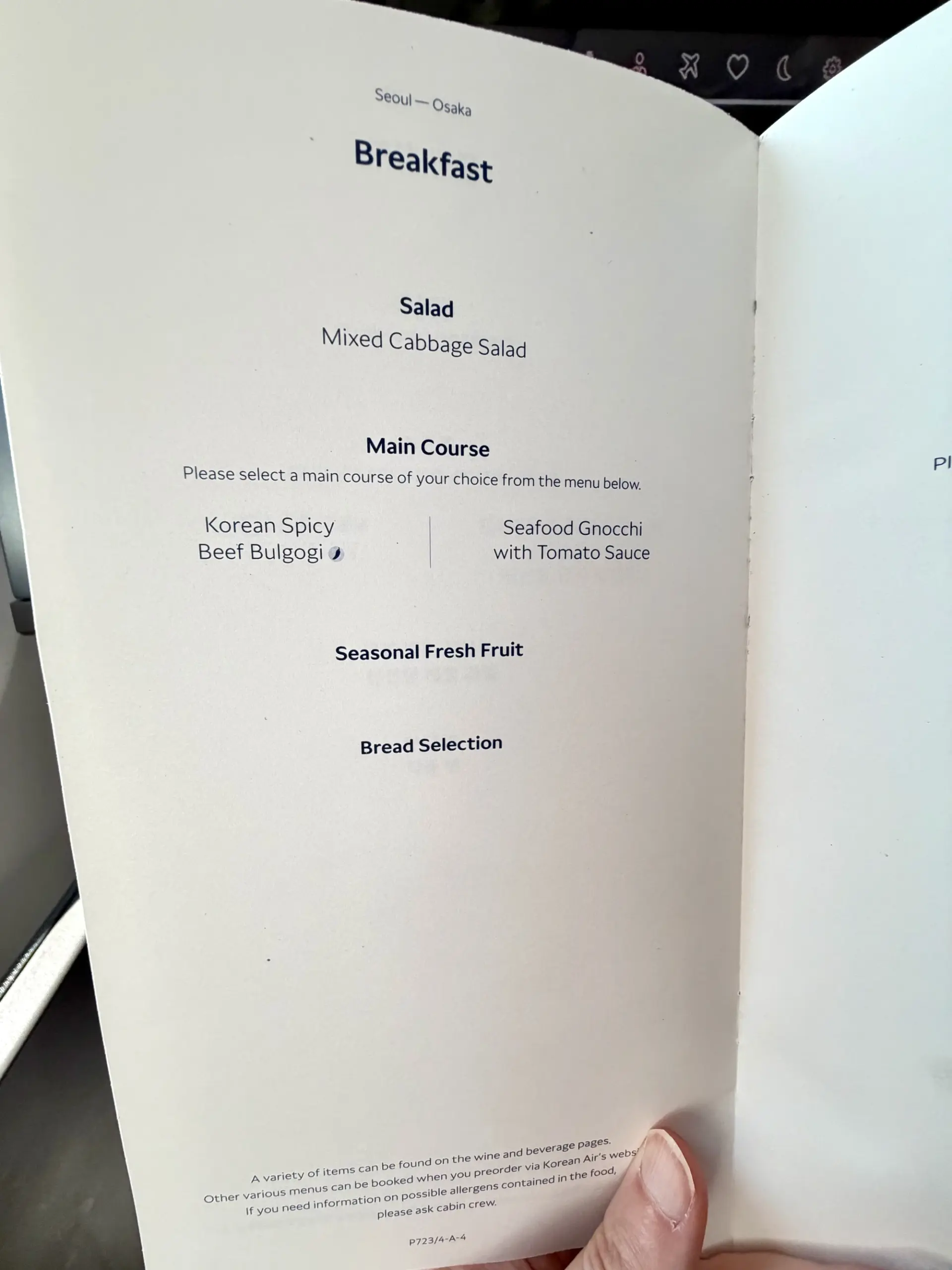
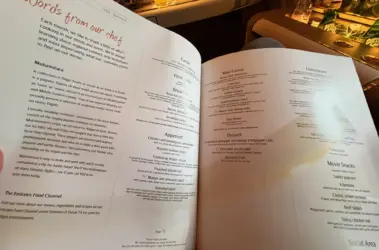
We ate from the lunch menu, which had a simple starter, a choice of two mains, and fruit as a dessert. Bread also came with the meal.
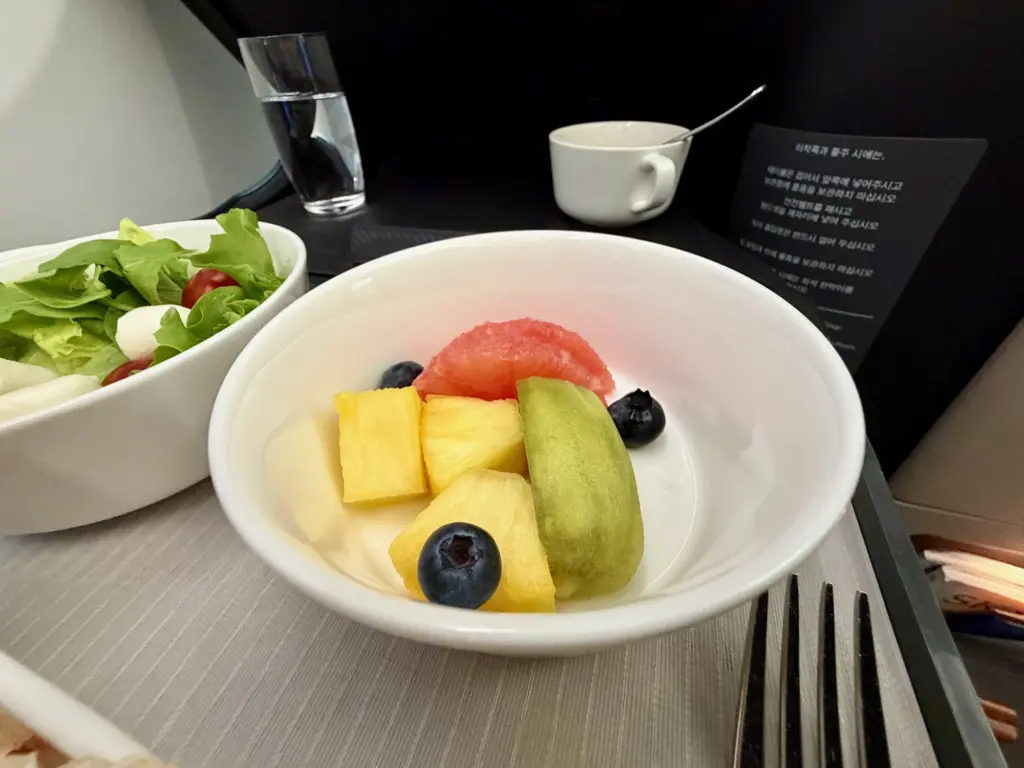
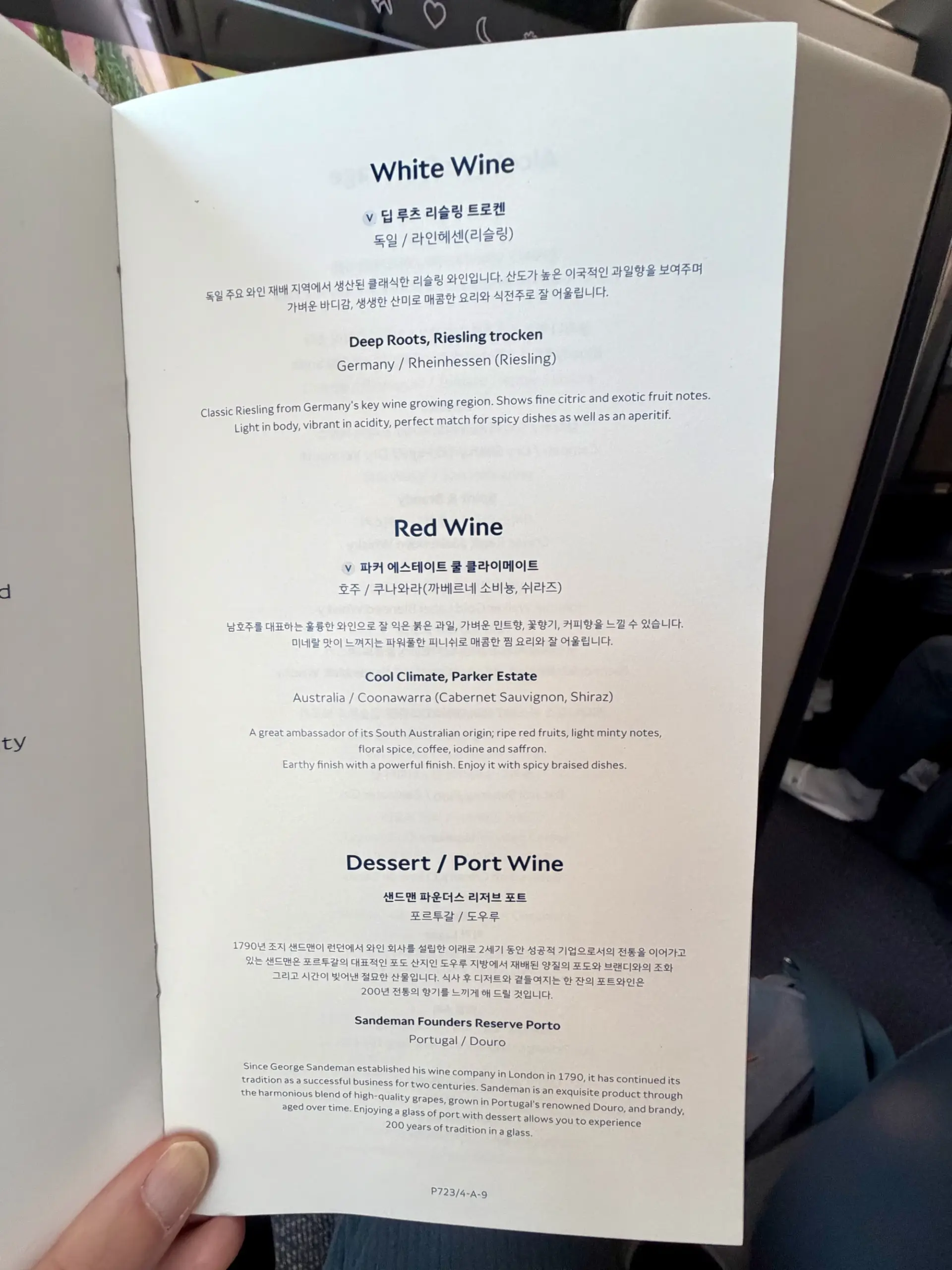
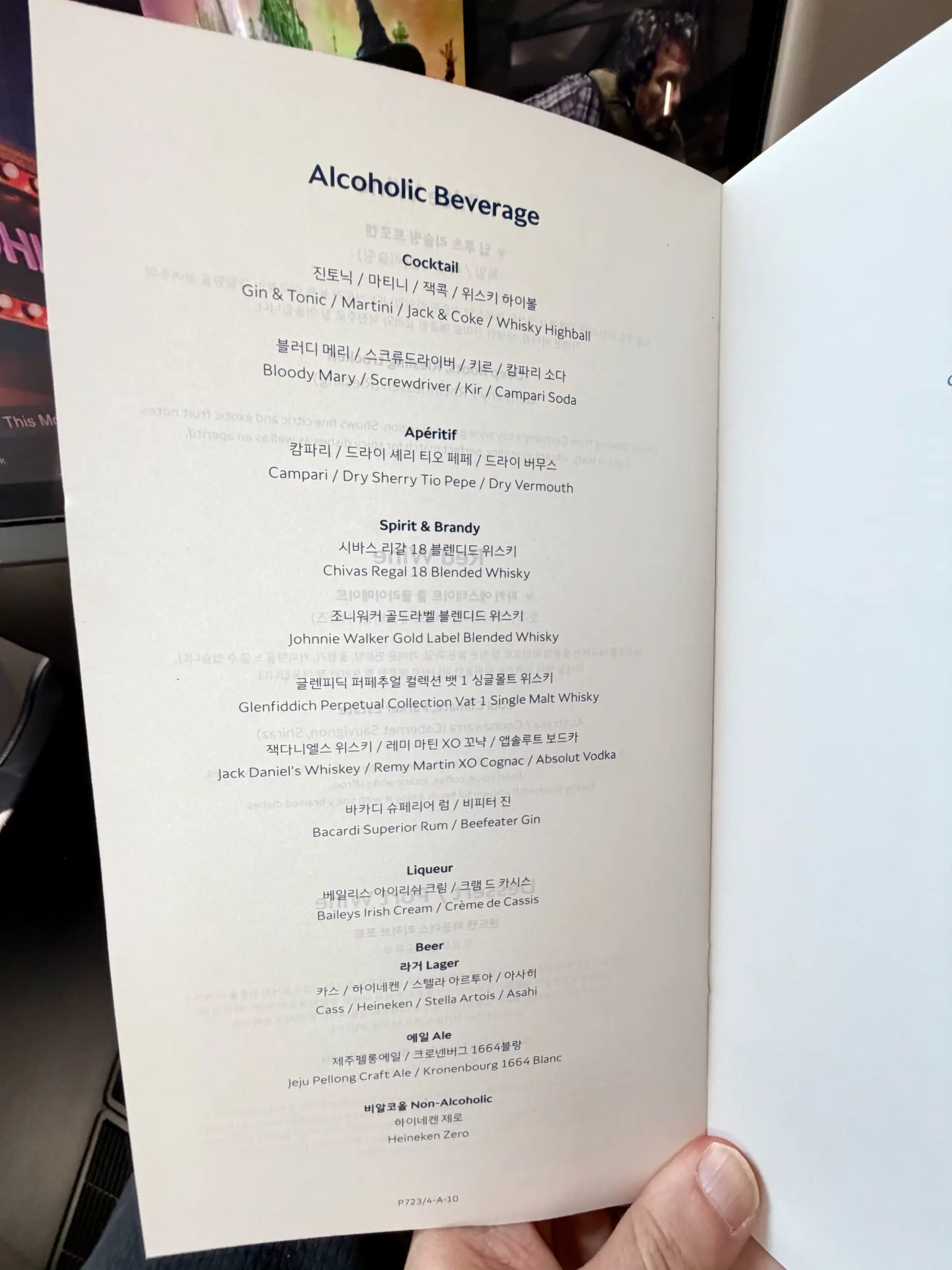
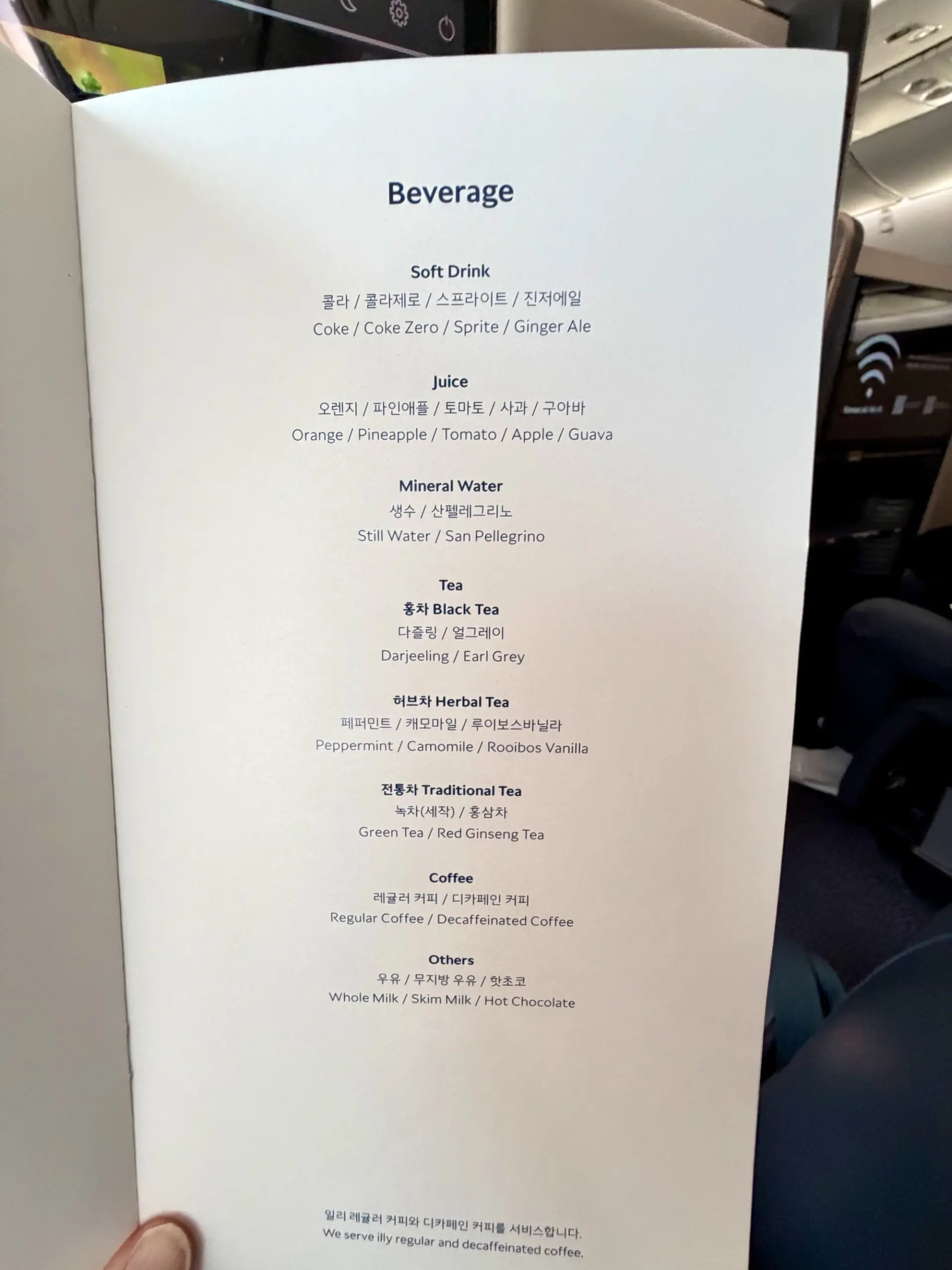
There was a reasonable drinks menu, with wine, cocktails and spirits. It was a decent set of options for a flight that was less than two hours, and I would say better than most intra-Europe meals. The pork dish was very good. I avoided the salad, and the fruit was, like most in the Far East, fresh and delicious
Wifi on Korean Air
Wifi was available on the flight, at a cost of $5.95 for full flight access to the best package or $1 less for just messaging. I ended up paying for access for our two-hour flight, and was disappointed with both the speed and how long it was actually available. Korean Air does not have Starlink, meaning it’s slow, spotty, and only available once you reach 10,000 feet (and stops when you descend below that).
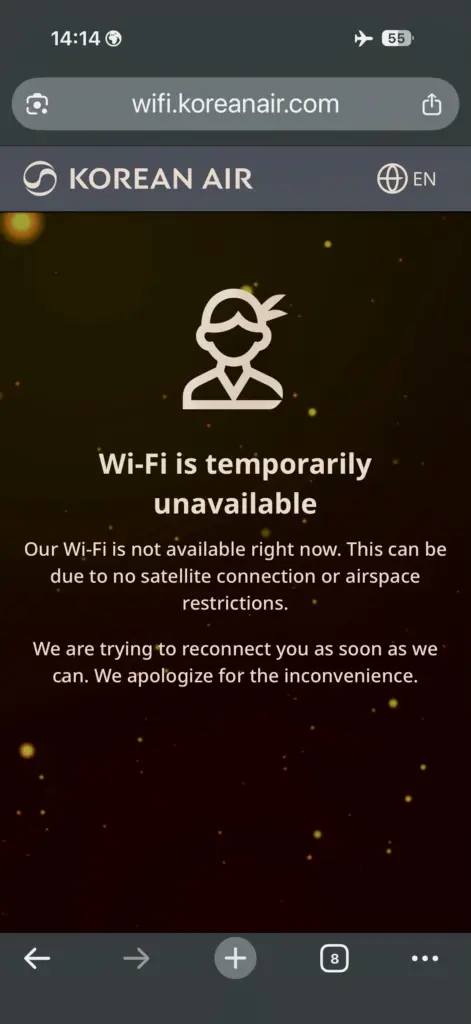
It wasn’t worth the cost, so unless you absolutely need to connect, I wouldn’t bother.
The verdict on Korean Air
I’d be happy to fly Korean again. The on-board service, food and drink were great, and the new Business Class suite was well proportioned and comfortable. There is nothing innovative about the suite; it’s just a good, functional seat that works for short-haul, and I have no doubt it would be very comfortable on some of Korea’s longer routes.
The lounge was an unexpected high point, and the boarding process was a low. Once on board, you do end up forgetting the confusion before the jet bridge.
I also think the flight was a good price: both the initial Economy seat and the upgrade to business were reasonable. Had this been a single-aisle narrowbody, which would have made sense for such a short flight, I still would have had a better seat than economy, as Korean Air has dedicated Prestige Class cabins.
Rating Korean Air Business (Prestige) Class


Add a comment